The Ultimate Guide to Polarised Glasses: See Clearly Now
The Ultimate Guide to Polarised Glasses: See Clearly Now
Struggling with blinding glare from wet roads or water surfaces? This harsh, reflected light not only impairs your vision but also causes significant eye strain. The definitive solution is a high-performance pair of polarised glasses, which use a special filter to block this specific type of light. By clicking our link, you'll discover a curated selection of top-tier eyewear designed to provide unmatched visual clarity and comfort, ensuring you see the world in crisp, vibrant detail.
【What Are Polarised Glasses & How Do They Work?】

Have you ever been momentarily blinded by intense glare reflecting off a wet road or a calm lake? That's precisely the problem polarised glasses are designed to solve. They go beyond standard sunglasses by incorporating a special technology to eliminate specific types of light for superior visual comfort and clarity.
The Science Behind How Do Polarised Lenses Work
The magic of polarisation isn't magic at all, but rather elegant physics. It targets the primary cause of blinding glare by filtering light in a very specific way, transforming your view from washed-out and harsh to crisp and clear.
The Horizontal Light Glare Problem
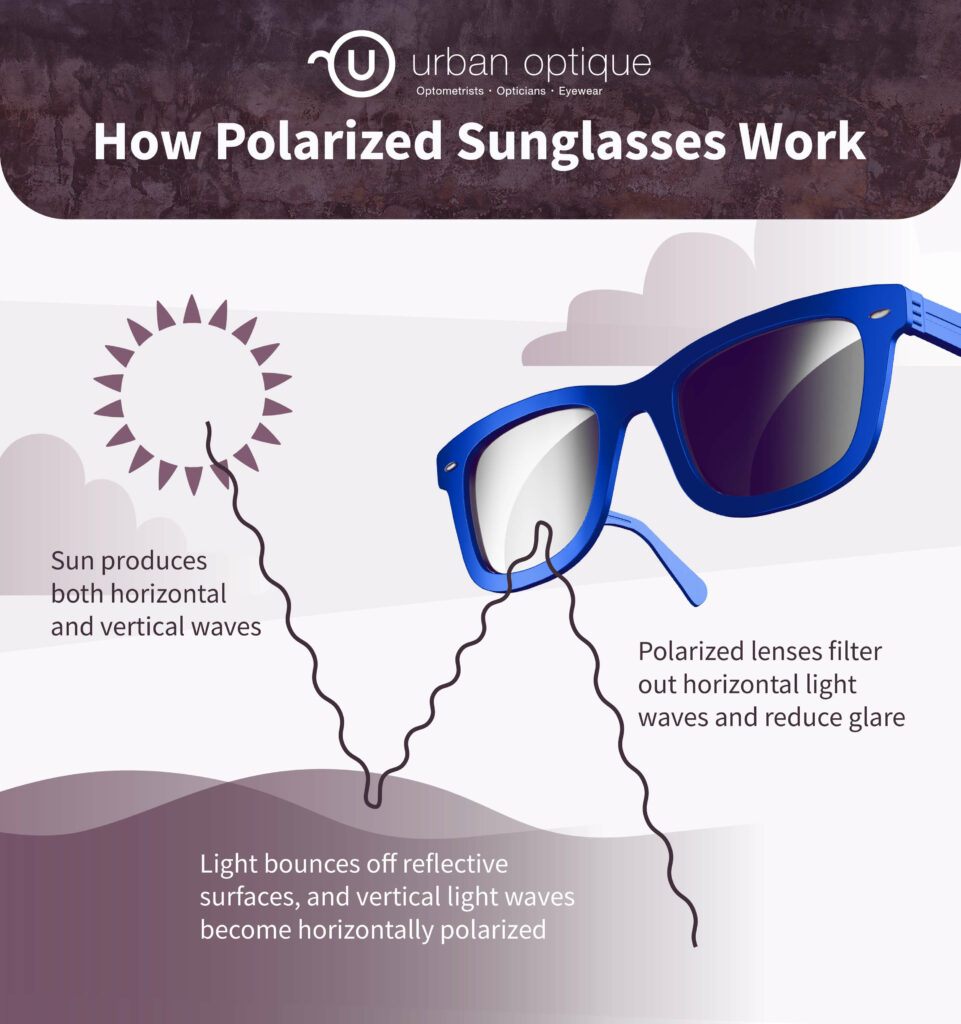
Most of the intense, eye-straining glare you experience comes from horizontal light waves. When light hits a flat surface like water or tarmac, it reflects horizontally, concentrating into a brilliant beam that bombards your eyes. A Polarised Lens is engineered with a special chemical film that acts as a smart gate to specifically combat this issue.
How a Lens Polarizing Filter Eliminates Glare
The film inside a Polarised Lens contains a vertically aligned filter, which you can imagine as a set of microscopic venetian blinds. This vertical pattern effectively blocks all horizontal light waves from passing through. By eliminating this glare-causing light, only user-friendly vertical light reaches your eye. This process results in a significantly clearer, glare-free view that dramatically reduces eye strain and visual fatigue.
Key Benefits of Polarised Sunglasses
Understanding the science is one thing, but the real-world advantages are what make these glasses indispensable for many activities. The benefits extend far beyond simply making your surroundings darker; they actively enhance how you perceive the world.
Superior Glare Reduction on Water Surface
For anyone involved in watersports, polarisation is a non-negotiable feature. It cuts through the blinding reflection on the water's surface, dramatically improving your ability to read waves, spot underwater hazards, and see what lies beneath. This is a critical advantage for high-performance Fishing Sunglasses, making activities like boating and angling both safer and more successful.
Enhanced Visual Clarity and Contrast
Polarised lenses do more than just remove bad light; they improve the good light. They enhance the vibrancy of primary colours like reds, greens, and blues while filtering out harsh yellow light, which results in much sharper, higher-definition vision. For anglers, these high contrast lenses are crucial for sight fishing, a technique that relies on visually identifying fish and underwater structures.
How to Test if Your Sunglasses Are Polarised
Worried that your sunglasses might not be genuinely polarised? There's a simple and definitive test you can perform right now with a common digital device to verify their authenticity for 2025.
The LCD Screen Test
Hold your glasses up and look at any liquid crystal display (LCD), such as your smartphone, a laptop screen, or your car's head-up display. While looking through one lens, tilt your head to the left or right. If your glasses are polarised, you'll see the screen dim or go completely black at a certain angle. This effect is the hallmark of viewing LCD screens with polarized glasses and confirms the filter is working.
Now that you can identify and appreciate the powerful benefits of true polarisation, finding a pair that offers this level of performance is key. To ensure you're getting optimal glare reduction and visual clarity, check out this curated selection of high-performance polarised glasses.
【Buyer's Guide: Choosing Your Perfect Polarised Glasses】

Selecting the right pair of polarised glasses involves more than just picking a style you like. To get the best performance, you need to consider the lens material, color, and frame design. This guide will walk you through the key decisions to find your perfect match.
Lens Material: Polycarbonate vs. Glass Lenses for Fishing
The choice between lens materials often comes down to a trade-off between optical purity and rugged durability. Your primary activities will determine which is the better fit for your needs.
Glass Lenses: The Choice for Optical Purity
For those who prioritize the absolute clearest view, glass lenses are unmatched. Glass offers the best optical clarity and is supremely scratch-resistant due to its inherent hardness. Premium brands often utilize glass for their top-tier models, though this quality comes with added weight.
Polycarbonate Lenses: The Lightweight, Durable Option
If you're active, polycarbonate lenses are an excellent choice. This material is significantly more lightweight and shatter-resistant, providing superior impact protection against things like an errant fishing lure. While more prone to scratches than glass, its durability makes it ideal for demanding sports and all-day wear.
What is the Best Polarised Lens Color?
Lens color isn't just an aesthetic choice; it's a functional feature that filters light differently to enhance vision in specific environments. Matching the lens tint to your conditions is crucial for performance.
Best Polarised Lens Color for Deep Water Fishing
When you're facing bright, full-sun conditions on open water, a blue or green mirror finish is your best bet. So, what are mirror finish sunglasses? They feature a reflective coating that bounces intense light away from the lens, providing an extra layer of protection, which is perfect for offshore angling.
High Contrast Lenses for Sight Fishing in Varied Light
For freshwater fishing or in variable, overcast light, you need high contrast lenses. Tints like copper, amber, or rose excel at separating colors and boosting contrast. This makes it much easier to spot fish and identify underwater structures, a critical advantage for sight fishing.
Understanding VLT Sunglasses Meaning and Lens Categories
VLT stands for Visible Light Transmission, which is the percentage of light a lens allows to pass through to your eye. For strong Glare Protection, a Category 3 lens with a VLT between 8-18% is ideal for bright sunlight. However, this low VLT can make the lenses too dark for dawn, dusk, or heavily overcast days.
Finding the Best Frame Style for Glare Protection
The frame is your first line of defense against light leaking in from the sides. The right frame style will maximize the effectiveness of your polarised lenses, especially during water sports.
Full-Wrap vs. Removable Side Shields
An aggressive, full-wrap frame provides the most complete coverage, blocking ambient light from entering your peripheral vision. Alternatively, some models feature removable side shields, offering a versatile solution that gives you maximum protection on the boat and a more casual look on shore.
Performance Features for Water Sports
Look for frames with purpose-built features for your activities. Floatable frames make retrieval easy if they go overboard. Vented nose pads and frames are also a key feature, as they promote airflow to prevent the lenses from fogging up during intense activity.
Finding the perfect combination of lens material, color technology, and frame design is the final step to defeating glare. To see how these features come together in expertly crafted eyewear, explore this diverse collection of top-rated polarised glasses.
【Polarised vs Non-Polarised: The Showdown for Specific Activities】

While polarised lenses are champions on the water, their unique properties can present challenges in other situations. Deciding between polarised and non-polarised eyewear often comes down to the specific activity you have in mind.
Polarised vs Non-Polarised Sunglasses for Driving
For most daytime driving, polarised glasses are a huge benefit, cutting down on dangerous glare from the road, wet surfaces, and other vehicles. However, there are a couple of key exceptions to consider before you make them your permanent driving companion.
The Head-Up Display and LCD Screen Challenge
One of the most significant disadvantages of polarised sunglasses is their potential to interfere with modern in-car technology. The polarising filter can make LCD dashboards, infotainment screens, and especially head-up displays (HUDs) appear distorted, blotchy, or completely black. Thankfully, as of 2025, some automakers have begun to address this, developing displays with special filters that remain visible even through polarised lenses.
Can You Wear Polarised Sunglasses for Night Driving?
This is an easy one: absolutely not. It is extremely unsafe to wear typical polarised sunglasses for night driving. The vast majority are Category 3 lenses with a very low VLT, designed specifically to block a large amount of light. Wearing them at night severely restricts your vision and creates a serious hazard.
Are Expensive Polarised Sunglasses Worth It?
You can find polarised glasses at nearly every price point, from under $20 to over $300. The difference in price often reflects a significant gap in optical quality, material technology, and durability. So, is it worth paying for a premium pair?
Budget-Friendly Options ($20-$35)
For those who are tough on their gear or prone to losing it, budget-friendly options can be a smart choice. Brands like Goodr offer functional polarisation and solid durability for around the $30 mark, making them a favorite for runners and casual users. While cheaper pairs from brands like Kaliyadi are polarised, they may exhibit some optical distortion and use lower-quality lens materials that scratch more easily.
Premium Tiers: Investing in Technology ($200+)
When you invest in a pair of high-end polarised sunglasses from a brand like Costa Del Mar or Smith, you are paying for superior optical engineering. You get advanced lens technologies like Smith’s ChromaPop or Costa’s 580G glass lenses, which offer unparalleled clarity and color enhancement. You're also paying for advanced features like encapsulated mirrors (which can't be scratched off), durable and lightweight bio-based frames, adjustable fits, and robust warranties that protect your investment.
Deciding between an affordable workhorse and a high-tech optical instrument depends entirely on your performance demands and budget. To see how these features and price points compare across different models, the best approach is to explore a wide selection. To find the perfect balance of technology and value for your needs, you can browse a diverse collection of polarised glasses.
【Debunking Myths: Your Polarised Glasses FAQs Answered】
Let's clear up some of the most common questions and misconceptions surrounding polarised eyewear. Understanding these details will help you make a much more informed decision when choosing your next pair.
Do Polarised Glasses Block UV Rays?
This is a critical safety question, and the answer isn't as simple as yes or no. The truth is that polarisation and UV protection are two entirely separate features that address different problems.
Polarization is for Glare, UV Coating is for Safety
The polarising filter itself is designed specifically to cut horizontal glare. A separate, transparent coating is applied to the lens to block harmful ultraviolet (UV) radiation. Therefore, a lens can be polarised but offer zero UV protection, and vice-versa. For your eye health, always ensure your sunglasses provide 100% UVA/UVB or UV400 protection, regardless of whether you choose a `Polarised Lens`.
What Are the Disadvantages of Polarized Sunglasses?
While incredibly beneficial, polarised lenses aren't perfect for every single situation. Their main disadvantage is the way their filter interacts with other polarised screens, creating visual interference.
Interference with Digital Displays
This can make it difficult or impossible to read LCD and LED displays, such as your smartphone, a GPS unit, or even some modern digital dashboards in cars. Additionally, because many `polarised glasses` are quite dark (Category 3), they can significantly reduce visibility in low-light conditions, like cycling through a dense forest or during very overcast weather.
How Polarised Lenses Can Reduce Eye Strain
One of the most celebrated benefits of `polarised glasses` is their ability to dramatically `reduce eye strain`. This is a direct result of how they manage bright light and reflective glare.
Less Squinting, More Comfort
By filtering out the intense horizontal light waves bouncing off surfaces like water or a wet road, these lenses stop you from constantly squinting to see clearly. This reduction in squinting directly translates to less muscular tension around your eyes, leading to greater comfort and less fatigue over long periods. This is especially noticeable during activities like driving for hours or spending a full day fishing on the water. If you're tired of ending your day with tired, sore eyes, the best way to see the difference is to try them yourself. You can explore a great selection of sunglasses that reduce eye fatigue to find a pair that offers you this all-day comfort.
【The Clear Choice: Why Polarised Glasses Are an Essential Upgrade】
In summary, understanding the technology and benefits of polarised glasses is key to making an informed purchase that genuinely enhances your visual experience. We've established that their core function is to eliminate blinding horizontal glare using a specialized vertical filter, a feature that standard sunglasses lack. This results in significantly reduced eye strain, superior visual clarity, and enhanced color contrast, making them indispensable for activities like fishing, boating, and driving.
When selecting your ideal pair, remember the critical factors: lens material (balancing the optical purity of glass with the durability of polycarbonate), lens color (matching tints like blue for deep water or copper for high contrast), and frame design (choosing full-wrap styles for maximum protection). It's also vital to be aware of their main limitation: potential interference with LCD screens and their unsuitability for night driving.
Ultimately, whether you opt for a budget-friendly model or invest in a premium pair with advanced lens technology, the upgrade to polarisation is undeniable. They are not just sunglasses; they are a high-performance tool designed to protect your eyes and sharpen your view of the world.
``` MjAyNTA3MjEwNzE4Mzk 当前显示MjAyNTA3MjEwNzE4Mzk。


Comments
Post a Comment